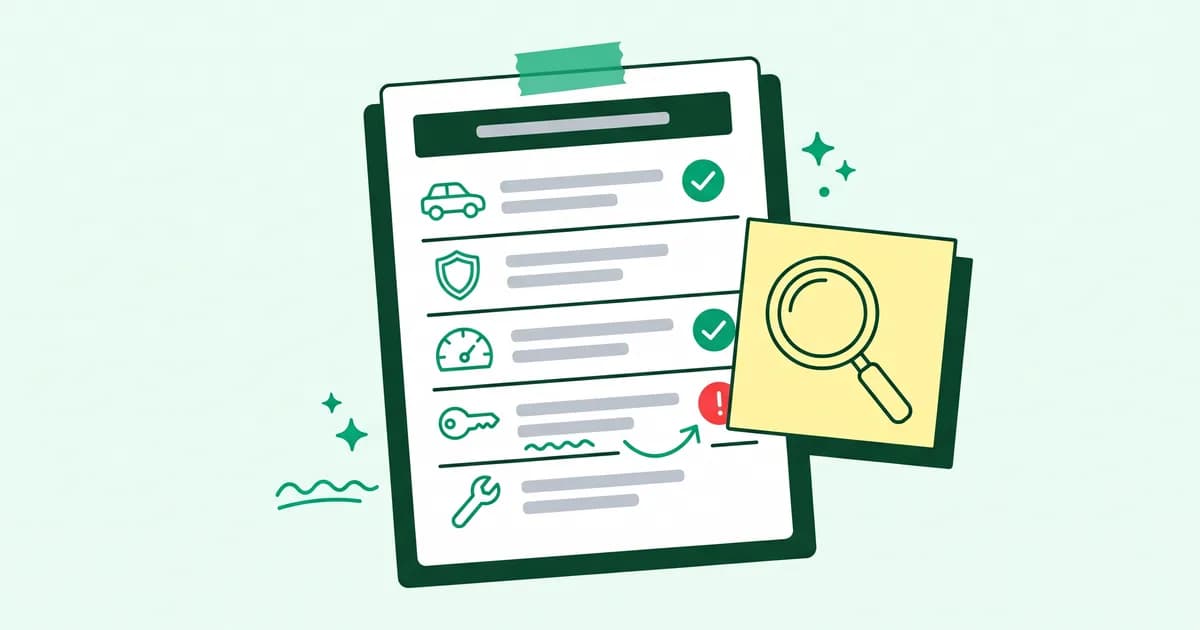
A vehicle history report lists the records found for one VIN, grouped by record type. Each section is worth reading on its own, and then together as one timeline. You can see how the sections look in our sample reports, or run a VIN check on the vehicle you are looking at and follow along.
Start with the vehicle details
The first section decodes the VIN: year, make, model, trim, engine and body style. Before you read anything else, check that it matches the vehicle in front of you and the VIN on its title. A mismatch here means you are reading the wrong report, or the vehicle is not what the listing says. If you are not sure where to look, see where to find the VIN.
Title records and brands
This section lists each title event with its date and state, and any brand the state recorded, such as salvage, rebuilt, flood, fire, junk or lemon.
- Read the whole timeline, not only the latest title. A brand recorded in one state can be missing from a later title issued in another. That gap is how title washing works.
- Note every state change. Moving between states is normal, but a new title in a new state shortly after a brand is worth a question.
- Know what each brand means. See salvage vs rebuilt title and what a lemon title means.
Odometer readings
Mileage is recorded at events such as title transfers, inspections, services and auctions. Read the readings in date order. They should only go up. A reading lower than an earlier one needs an explanation: it can be a typing error in a record, a replaced instrument cluster, or a rollback. Long gaps with no readings are common and are not a problem on their own.
Accidents and damage
This section lists reported accidents and damage, with whatever detail each record gives: the date, and sometimes the area of the vehicle or the severity. Two points matter:
- No entry means no report was found. Many accidents are repaired without an insurance claim or a police report, so they never reach a record.
- A reported accident is a reason to look closer, not always to walk away. Ask for repair invoices and have a mechanic check the repaired area.
Auctions and sales
If the vehicle went through an auction or a sale listing, this section shows the record with its date and mileage, and photos where they exist. Photos can show damage before a repair, which is often the clearest evidence in the whole report. A vehicle sold at a salvage auction and listed for sale soon after deserves a close look. See auction damage codes explained to read what the listing said.
Owners and type of use
This section shows how many owners are on record, roughly how long each kept the vehicle, the state, and the type of use, such as personal, lease, rental or fleet. It never shows names or addresses. A former rental is not a bad buy by itself, but it usually means high mileage for its age and many different drivers.
Theft and liens
A theft record shows the vehicle was reported stolen, and a recovery record shows it was found. A recovered vehicle can still have damage or missing parts. A lien record means a lender had an interest in the vehicle. Before you pay, confirm with the seller and the state title office that any loan has been paid off, because an open lien can follow the vehicle to you.
Recalls and service
Recall records list safety recalls for the vehicle as of the report date. You can also check open recalls for free with NHTSA's recall lookup. Service records come from shops that report their work. Many do not, so gaps in service history are common and are not proof that maintenance was skipped.
What "no records found" means
A section with no records means that none were found in the available sources. It does not mean the vehicle has a clean history. Coverage varies by vehicle, year, state and source, and older vehicles, classics, motorcycles and trailers usually have fewer records. Read an empty section as "nothing reported", then check that part of the vehicle yourself.
A quick checklist
- The VIN and vehicle details match the car and its title.
- Every title brand, in every state, is accounted for.
- Odometer readings only go up.
- Any accident, auction or theft record has a repair story you can verify.
- Any lien is confirmed as paid off.
- Open recalls have been fixed, or you know how to get them fixed.
- A mechanic you choose has inspected the vehicle.
Frequently asked questions
Which section matters most?
The title records. A brand such as salvage or flood changes what the vehicle is worth, whether it can be insured and whether a lender will finance it.
Does a short report mean something is wrong?
No. A short report usually means few events were reported, which is common for newer vehicles, older classics and vehicles that stayed with one owner.
Can a report replace an inspection?
No. A report shows what was reported. An inspection shows the vehicle's condition today. You need both.