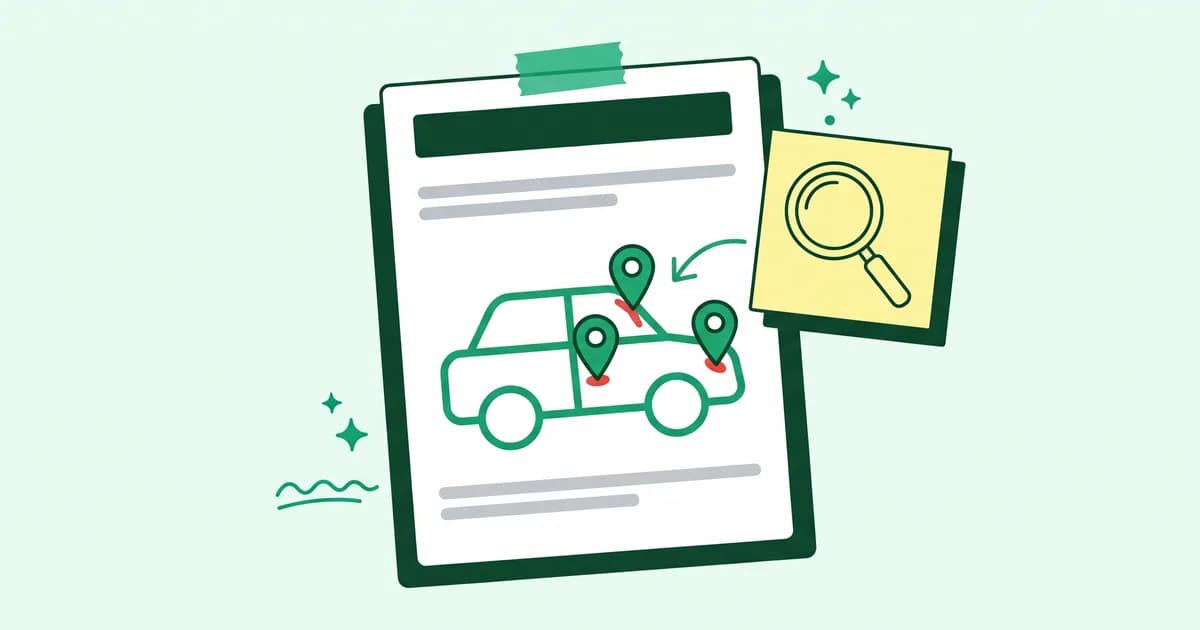
Before you run a VIN check, you need the VIN itself, and you should read it from the vehicle rather than from the listing. A typo in one character gives you the history of a different car. Once you have it, our free VIN decoder shows which vehicle the code belongs to.
Cars, SUVs and pickup trucks
| Where | What to look for |
|---|---|
| Dashboard, driver's side | A plate at the base of the windshield, readable from outside the car |
| Driver's door jamb | The certification label on the door edge or pillar, which also shows the build date |
| Paperwork | Title, registration card, insurance card and loan documents |
| Window sticker | The original Monroney label, if the seller kept it; see how to read a window sticker |
Many vehicles also carry the VIN on the engine block, frame or body panels. Those locations vary by maker.
Motorcycles
The VIN is usually stamped on the steering head, the part of the frame the front forks turn in. Some makers also print it on a label on the frame. The engine has its own number, which is not the VIN.
Trailers and RVs
On trailers, check the tongue or the front of the frame. Motorhomes usually have the VIN on the dashboard like a car, plus a label inside a cabinet or door.
Classic vehicles
Before the 1981 model year, VINs were shorter and placed where each maker chose: door pillars, firewalls, frames and glove boxes are common. The VIN number guide covers how those older codes differ.
What a mismatch means
Every VIN on a vehicle should match every other one and the title. If they differ, if a plate looks loose or re-riveted, or if a label has been scraped or covered:
- Stop the sale until the difference is explained in writing.
- Run a stolen vehicle check on each VIN you found.
- Ask the state title office or police to inspect the vehicle if anything still does not add up.
A mismatch does not always mean theft. Panels get replaced after accidents, and labels fade. It does mean the car's story needs checking.
Frequently asked questions
Can I get a VIN from a license plate?
Often, yes. Our license plate lookup finds the VIN for a US plate. It never shows owner names or addresses.
Is it safe to share a VIN?
A VIN identifies the vehicle, not the owner, and is visible through the windshield. Sellers routinely share it with buyers.