The Scale of the Problem
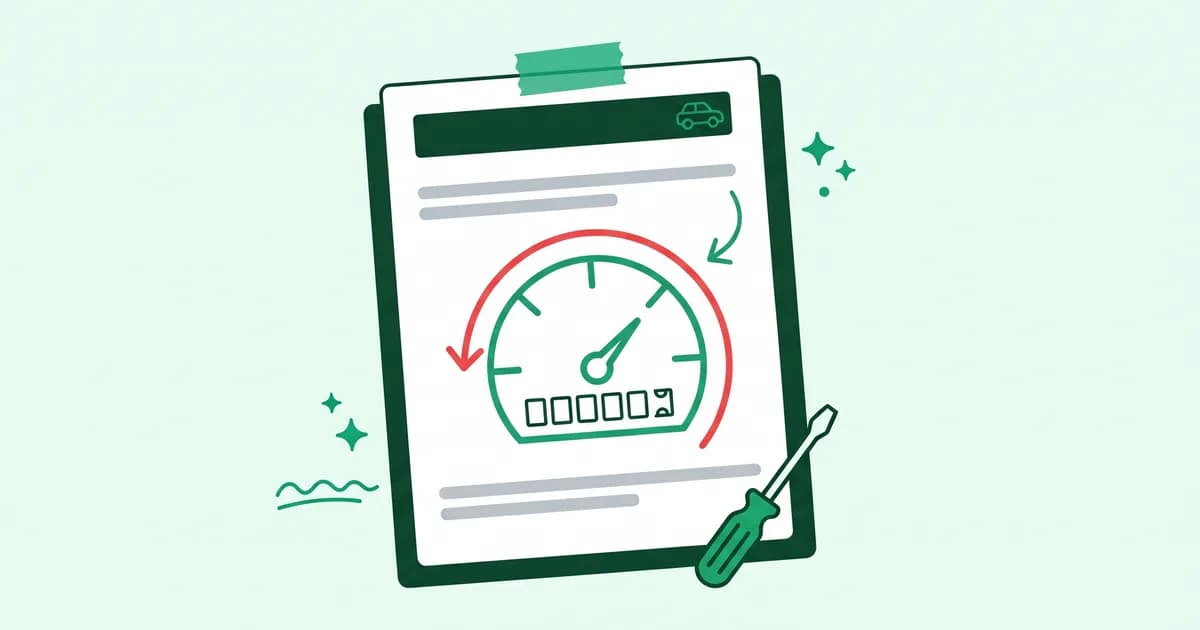
According to NHTSA estimates, approximately 450,000 vehicles are sold each year in the United States with rolled-back odometers. Buyers who fall for this lose an average of $4,000 — sometimes significantly more on high-value trucks and luxury vehicles.
Modern digital odometers made this fraud harder, but not impossible. Unscrupulous sellers now use specialized devices, replacement instrument clusters, and careful information control to make the numbers look plausible. Here is exactly what to watch for.
Red Flag #1 — Service Records Don't Add Up
Every time a vehicle visits a service shop, the mileage is recorded. A rolled-back odometer creates an impossible timeline — the recorded mileage at a 60,000-mile oil change will be higher than what the odometer now shows.
Smart sellers will refuse to provide service records, claim they were "lost in a move," or only show a few selective receipts. Be suspicious of any vehicle where the seller can't produce a reasonably complete service history.
What to do: Run a VIN history report before meeting the seller. Shops upload mileage readings to national databases automatically — you can spot the discrepancy before you waste a trip.
Red Flag #2 — Interior Wear Contradicts the Mileage
Humans interact with a vehicle in predictable ways, and the interior wears at roughly consistent rates. A vehicle with 30,000 miles on the odometer should look nearly new. If it doesn't, that's a red flag.
- Steering wheel — Worn leather or discolored plastic at 9 and 3 o'clock positions indicates heavy use, not low mileage.
- Pedal rubber — The brake, clutch, and accelerator rubber wears down predictably. On a "low mileage" car, it should look nearly factory fresh.
- Driver seat bolster — The left side of the driver seat takes constant entry/exit wear. Deep creasing or cracks don't match a low-mileage claim.
Red Flag #3 — Tire Age Doesn't Match
Tires typically last 25,000–50,000 miles depending on driving style and tire quality. A vehicle claimed to have 35,000 miles should either be on its original set — or have clearly documented replacement records.
Check the DOT date code on the tire sidewall. The last four digits tell you the week and year of manufacture. Brand-new tires on a vehicle that supposedly isn't high-mileage is actually a sign that the previous tires wore out and needed replacement.
Red Flag #4 — VIN History Shows Higher Numbers
This is the most definitive red flag — and the one sellers can't fake. Auction houses, insurance companies, dealerships, and service shops all upload mileage readings to national vehicle history databases. If a prior record shows higher mileage than what's currently on the odometer, you're looking at fraud.
"If the odometer shows 42,000 miles but auction records show 87,000 — you just caught them."
This is why running a VIN history report before any purchase isn't optional — it's the one check that no amount of physical preparation can defeat.
The Digital Solution
A VIN history report aggregates records from hundreds of sources — auctions, service shops, DMVs, insurance companies, and fleet operators. Every time the vehicle was checked in anywhere, a mileage reading was logged.
The report doesn't just show you the current reading — it shows you the entire timestamped mileage history. A single inconsistency anywhere in that timeline is a definitive finding.
Run a Check Now
Don't rely on the seller's word.
Enter any 17-digit VIN to instantly pull the full odometer history — every reading, timestamped.
Odometer Fraud FAQ
Can a digital odometer be rolled back?
Yes. Sellers use specialized devices or swap the instrument cluster, so a digital reading alone proves nothing. Compare it with the mileage history in a VIN check.
Where does the mileage history in a VIN report come from?
Auction houses, insurance companies, dealerships and service shops upload a reading every time the vehicle passes through them.
What should I do if the history shows higher mileage than the odometer?
Treat it as fraud: walk away, or ask the seller to explain it in writing before you go any further.